
Search Bartlett Unclaimed Money
Bartlett residents looking for unclaimed money usually begin with the city finance department, then check the Tennessee Treasury result, and then compare both with the records that show where the money came from. The city handles a lot of the daily paper trail, from business licenses to utility billing, so a missed payment or old credit can be easier to trace than it first looks. If the account passed through city finance, the right office page and a clear record trail can turn a vague lead into a real claim.
Bartlett Quick Facts
Bartlett Unclaimed Money Search
The city finance department is the main local starting point for Bartlett unclaimed money. The official page is the Bartlett Finance Department, and it says the Finance and Administration Department manages the city's financial affairs. That includes accounting, accounts payable, budgeting, business licenses, debt management, information technology, surplus property auctions, payroll, and purchasing. Those duties matter because a claim often starts as one of those ordinary city transactions.
Bartlett's public records portal is also useful. The city homepage at the City of Bartlett website points to the NextRequest process for public records, which gives claimants a way to ask for city records when they need proof. That is helpful if the money trail involves a name change, an old account, or a notice that needs to be matched with the owner. The city also notes that Shelby County collects property tax, while Bartlett administers business licenses and utility billing. That split tells you which office likely touched the money first.
The state search still matters. The Tennessee Treasury page at Tennessee Unclaimed Property is the statewide check that should sit beside the Bartlett page. If the property is there, ClaimItTN is the filing path. A clean search usually begins with the local office and ends with the state record, not the other way around. Bartlett's finance records give the state result context, and the state result tells you whether the owner should keep searching or start the claim.
That order matters because Bartlett handles several money streams at once. A city payment can sit in accounting, a business license matter can sit in finance, and a utility bill can sit in the billing system. The right office page helps narrow the path fast.
Keep the search simple. Use the exact name, old addresses, and any business name tied to the account. Small details often do most of the work.
Bartlett Unclaimed Money Records
Bartlett unclaimed money records are tied to how the city manages financial affairs. The finance department handles accounting, accounts payable, budgeting, business licenses, debt management, information technology, surplus property auctions, payroll, and purchasing. That matters because those are the places where old checks, refunds, or overpayments can be logged before they ever become a claim. A strong search starts by identifying which of those functions likely touched the funds. Once that is clear, the claim becomes much easier to read.
The city's NextRequest portal is also a record tool. The site says public records requests can be submitted through the city website, and that is the right path if the owner needs a copy of a notice, a payment record, or another city document tied to the money. Bartlett's police records are separate, so the finance trail stays in its own lane. That separation helps because it keeps the claim focused on the offices that actually handled the funds instead of drifting into unrelated records.
For some owners, Bartlett Electric Cooperative is part of the search too. It is a separate entity from city government, but it issues unclaimed property notices for capital credits. That is a different kind of money trail, and it should not be mixed with city finance. Still, it matters for residents who have an electric cooperative account, because those capital credits can be forgotten in the same way a city refund can be forgotten. The cooperative page is a useful second check when the owner had both city and utility ties in Bartlett.
These records work best when they are kept in order. The city finance page gives you the office, the city website gives you the request route, and the cooperative page gives you a separate utility context if needed. That makes the search cleaner and cuts down on false matches.
When the paper trail is thin, old addresses and account types matter more than ever. Use them carefully and keep them tied to the office that likely created them.
The Bartlett finance listing below is the source for the local image used on this page, which helps connect the page to the city office that manages the claim trail.
The Bartlett Finance Department page is the source page for the image used on this guide.
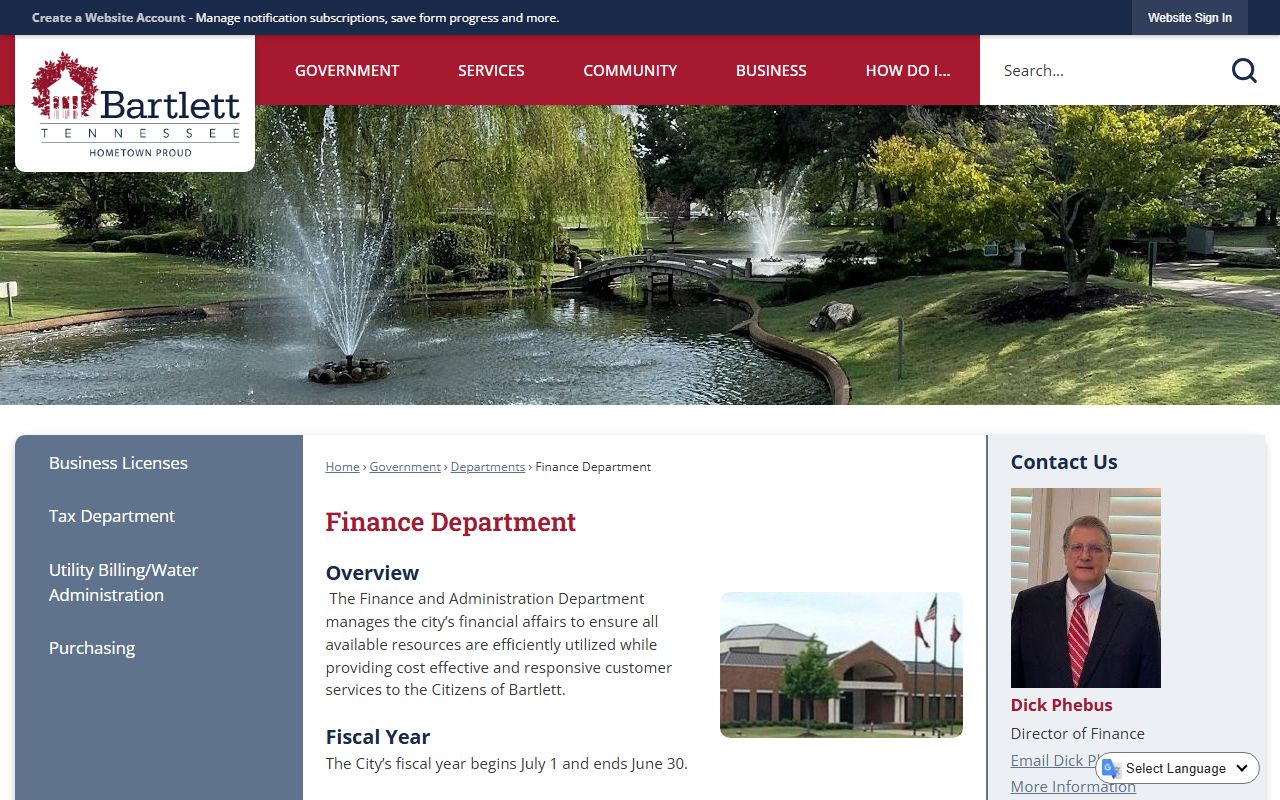
That image fits Bartlett because the finance department is the main local office for records, billing, and claim support.
Bartlett Unclaimed Money Claims
Bartlett unclaimed money claims are easier to handle when the owner understands the city functions behind the record. The finance department handles the books, and the city site gives the public record route. If the money is already on the state side, the Treasury system and ClaimItTN are the next steps. If it is not there yet, Bartlett records may still show the account history that proves ownership. That is the key difference between a dead search and a usable one.
The city page also helps clarify where the claim should not go. Because Shelby County collects property tax, a tax-related balance may need county context even when the city handled the business license or utility side. That split is important. It keeps the claimant from wasting time on the wrong office. If the issue involves a utility bill, a business license payment, or a finance record, the city side is the first place to look. If it involves a state remittance, the Treasury search is the next place to check.
For claims that need a document request, the Bartlett website and NextRequest portal are the simplest public path. They let the claimant ask for the exact record that matches the old payment or notice. That is often better than trying to reconstruct the history from memory. A clean record request can show the account name, the date, and the office that handled the money. Those facts are the backbone of a claim.
If a claim is denied, the Tennessee statutes matter. The public search and notice rule in T.C.A. § 66-29-130 explains the statewide search structure, while T.C.A. § 66-29-155 gives the appeal path. Those links are useful later. The first job is still to match the Bartlett record to the correct owner and money type.
Bartlett is a good example of a city where finance, records, billing, and utility work all touch the same search. The claim works best when each piece stays in its own lane.
Keep the office names current and the account details exact. That is what makes the claim readable.
Bartlett Unclaimed Money Access
Bartlett unclaimed money access depends on using the city's own website as the front door. The finance department page gives the contact line, the city site gives the records route, and the Tennessee Treasury gives the statewide search. Those three together cover most of the search path a claimant needs. If the owner had a business license, utility billing, or another city account, the paper trail can usually be traced back to one of those functions.
The city is also careful about separating its public records process from other records work. That helps because a claimant does not need every city file. They need the one that proves the money belongs to them. A request through NextRequest can be enough to get that piece. Once the record is in hand, the state search and claim process are much easier to complete.
For Bartlett residents, Bartlett Electric Cooperative adds one more possible source of unclaimed value, but it should be treated as a separate utility path. Capital credits are not the same thing as city finance records. They can matter to the same person, but they should be searched separately. That keeps the claim clean and avoids mixing utility notices with city money.
Use the city finance office first, the city records portal second, and the state search third. That order fits the way the money usually moves. It also gives the owner a better shot at finding the right balance without extra noise.
The strongest claims are the ones that show the same name in the same place more than once. Bartlett records can do that if they are gathered carefully.
Search Bartlett Unclaimed Money
Search Bartlett unclaimed money by starting with the finance department and the city website, then checking the Tennessee Treasury and ClaimItTN. If the city side has a record, use it to anchor the owner name, business name, or old address. If the state side has the property, use that result to confirm what still needs proof. That gives the search a clear path and keeps the claim from turning into a guess.
Bartlett's finance department is broad enough to matter and specific enough to be useful. It handles the ordinary business of the city, and that is where most small balances are born. A utility payment, a license issue, or a refund can all end up in the same search file. The right record request will usually show which one matters.
If you are helping someone else, keep the record trail in the same order the city likely used. That makes it easier to read later and easier to file if the claim has to move forward.