
Search Chattanooga Unclaimed Money
Chattanooga residents looking for unclaimed money usually start with the city finance office and then work outward to the state claim site. That path helps when an old refund, deposit, or check went stale before it reached the right person. Chattanooga also has a local treasury office that can help sort out payment questions, property tax issues, and business license records. The cleanest search often comes from matching a city clue with the Tennessee Treasury result, then checking the local office trail before you file.
Chattanooga Quick Facts
Chattanooga Unclaimed Money Search
The best first stop is the city finance page at Chattanooga Finance & Administration. The office is in City Hall Annex in Chattanooga, Tennessee 37402, and the department handles budget, accounting, and treasury work. City Finance Officer Weston Porter leads the office. That matters because many unclaimed money clues begin as city payments that were never cashed, refunded charges that sat too long, or records tied to a local account. The office phone is (423) 757-5230, and the fax line is (423) 757-0525.
Chattanooga also keeps a separate treasury page at City Treasury. The treasury contact is built for tax, license, and payment questions, and the office lists a phone number of (423) 643-7262. Property tax questions go to ptax@chattanooga.gov, business license questions go to busl@chattanooga.gov, and tax relief questions go to (423) 643-7274 or taxrelief@chattanooga.gov. Assistant City Treasurer Roberta Long is named in the research notes, which gives searchers a real office contact when a city record needs follow-up.
That local path is useful because a city result can support a state claim. A person may see one amount in the Tennessee database and a second clue in Chattanooga records. When both point to the same name and address, the claim packet gets stronger. It also helps if the owner changed a street name, switched a business name, or moved between the city and county lines.
The state search is still part of the process. Use ClaimItTN and the Tennessee Unclaimed Property Division to check the statewide record first. Then bring the city details back to the same file. That is the safest way to handle Chattanooga unclaimed money when you want a clean and quick review.
For a local image tied to the official city finance page, the manifest points to Chattanooga's finance office snapshot. The source page for that image is the city finance department.
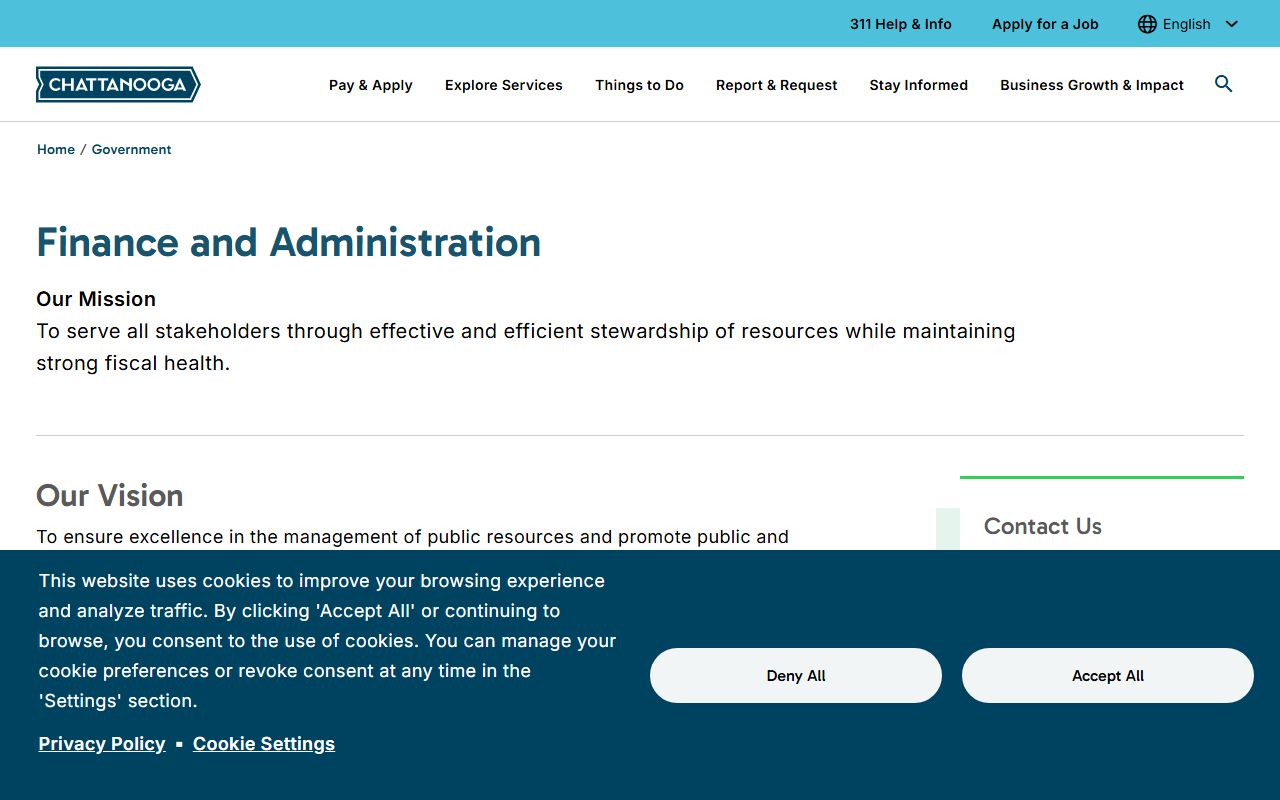
This image keeps the page tied to the city office that most often starts the search. It also gives the reader a clear visual cue that the city and state trails should be checked together.
Chattanooga Unclaimed Money Records
Records matter because they show where a claim trail begins. The city finance office can point you to the right payment unit, while the treasury page helps when the issue sits in tax or license work. Chattanooga's finance records are not the same thing as state unclaimed money, but they often explain why a name, account, or refund appears in the first place. That is why a careful search should not stop at the first match.
The city also keeps a public finance paper trail that can support a search. The research notes point to a FY2025 financial report, which tells you the city maintains a current fiscal record set. In practice, that can help when a name shows up in an old budget note, a tax refund, or another local money trail. If the city file confirms the same owner data that appears in ClaimItTN, the claim is easier to verify.
One useful local contact from the research is City Council Clerk Nicole Gwyn at (423) 643-7170. The associated address detail is 1000 Lindsay Street, Chattanooga, TN 37402. That is not the same office as city finance or treasury, but it gives another local point of contact when a record needs a formal route through the city system. A good search uses every reliable city clue, not just one office.
Chattanooga residents should also remember that not every local clue belongs to the city itself. Some items belong to county records, some to the treasury, and some to the state claim site. That is normal. A strong file may use a city finance page, a treasury note, a public report, and a state claim result together. Keep the facts in order and the path stays clear.
When a record has a former address or a business name, it helps to compare all known versions before filing. Small spelling changes can block a hit. So can a street suffix, an old PO box, or a name with a middle initial missing. Chattanooga's records are most useful when the search stays precise and patient.
The treasury page at Chattanooga City Treasury is the second local source tied to this page's image set, and it is the best visual reference for the payment and tax side of Chattanooga unclaimed money work.
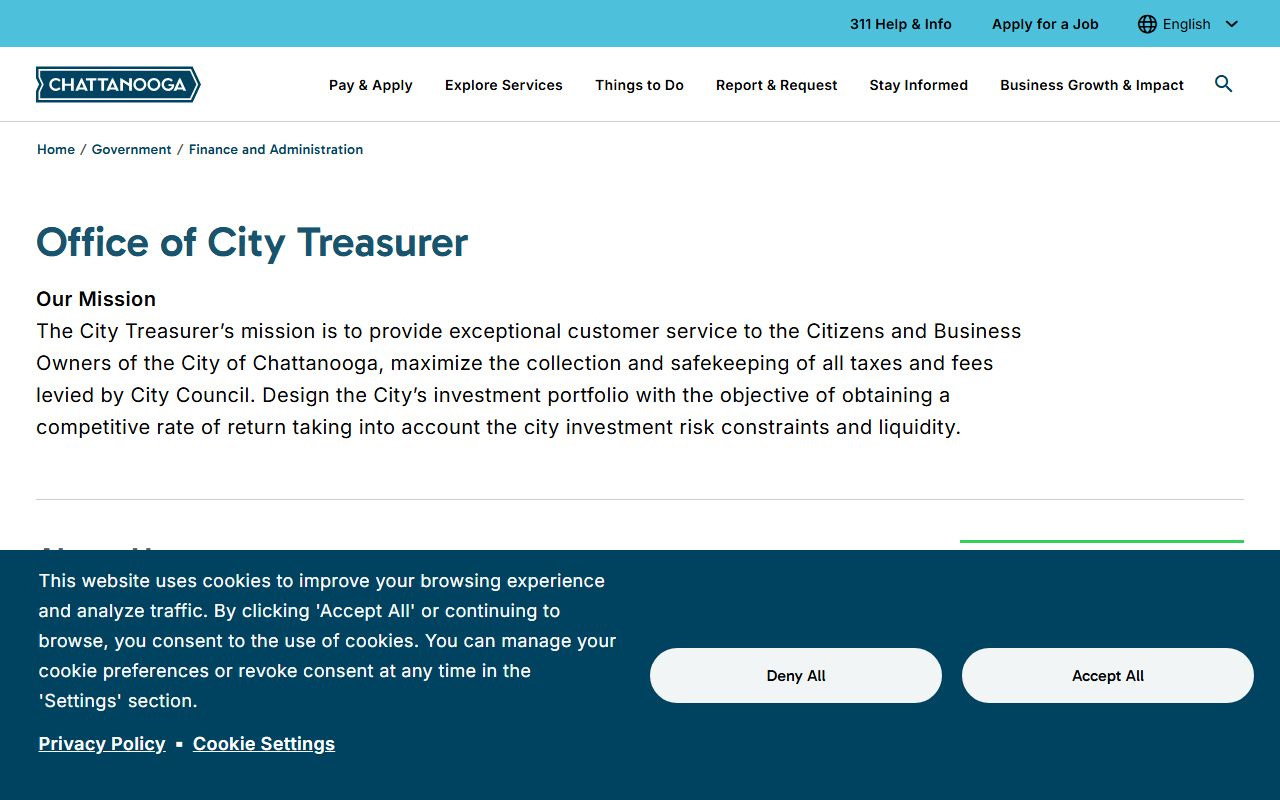
That treasury image matters because it shows the office that handles property tax and business license questions. Those are often the local records that help explain why a Chattanooga balance later appears in the state claim system.
For readers who want the official state source, the Tennessee claim site at ClaimItTN remains the central place to start. The city records then help confirm whether the owner match is clean enough to move forward.
Chattanooga Unclaimed Money Rules
The legal rule set is not local to Chattanooga alone. Tennessee's unclaimed property law governs the statewide process, and the city offices work inside that larger system. The notice rule in T.C.A. 66-29-130 requires the state to keep a searchable public database and send notice to apparent owners. That is why the state claim site matters from the start.
If a claim is denied, T.C.A. 66-29-155 gives an appeal path in chancery court. That rule matters because a user may need to push a hard claim when the office does not accept the first round of proof. The appeal route is not the first step, but it is part of the full path. It also shows why the city and state records should be kept in one packet from the start.
Chattanooga's finance and treasury pages are useful because they show the local side of that larger system. The city handles budget work, treasury work, property tax questions, and business license questions. In a claim search, each of those can provide a clue. A refund, a deposit, or a license payment may point to the same owner profile that appears in the state database.
Searchers should keep the process simple. Start with the state. Confirm the city. Then use the same name, same address, and same record trail in every request. That is the safest way to avoid delay and the best way to keep Chattanooga unclaimed money claims readable for the office that reviews them.
Chattanooga Unclaimed Money Help
If you need help after the first search, Chattanooga gives you a clear set of official touch points. The finance page at chattanooga.gov/government/finance and the treasury page at chattanooga.gov/government/finance/treasury are the main local sources. The state claim portal at ClaimItTN and the state division at treasury.tn.gov/Unclaimed-Property handle the statewide side.
The cleanest next step is to compare the city result with the state result and make sure the same owner data appears in both places. If it does, save the claim number, save the office notes, and keep the proof together. That is the best way to handle Chattanooga unclaimed money without wasting time on duplicate searches or vague records.
Chattanooga's local offices are especially helpful when a payment trail touches taxes or licenses. That includes a property tax issue, a business license refund, or another city payment that sat too long. The treasury office can point the search in the right direction, and the city finance office can help make sense of the local record trail.
Note: Keep the city and state records together, because Chattanooga claims are easiest to prove when the office trail and the owner trail match.