
La Vergne Unclaimed Money Search
La Vergne residents looking for unclaimed money should start with the city forms page, then compare the result with the Tennessee Treasury, and finally line up the city records that show where the balance came from. The city handles property taxes, utility billing, business licenses, and records requests, so a small refund or abandoned balance can move through more than one office. A good search starts with the current city contact, stays with the exact account type, and ends with the proof that links the owner to the money.
La Vergne Quick Facts
La Vergne Unclaimed Money Search
The main local entry point is the La Vergne forms page. It lists the city address at 5093 Murfreesboro Road, La Vergne, TN 37086, along with phone 615-793-6295 and fax 615-793-6025. The page also includes abandoned property and vehicles forms, which makes it a useful first stop when a claimant is trying to match an old city record to an unclaimed balance. That kind of form page often matters more than people expect because the forms show exactly where the city wants the request to start.
La Vergne unclaimed money searches should be tied to the city finance side because the city handles property taxes, utility billing, and business licenses. The broader city site at the La Vergne website notes online payments, phone payments, and records available upon request. That is useful when a refund, credit, or old payment may have moved through the city's systems before it became unclaimed. The tax rate is $0.536 per $100 assessed value, and the county overlap rate in the research is $1.8762, so tax-related questions should be read in the right local context.
The state side still matters. Tennessee Unclaimed Property is the statewide search owners should always check, and ClaimItTN is the filing path if the money is there. La Vergne's city records can help explain why the owner appears in the state system, but the state portal is what shows current custody. That makes the two searches work together instead of competing with each other.
La Vergne has a practical records setup. The city site, the forms page, and the finance-related payment tools all point in the same direction. That is good for claimants because it reduces guesswork and keeps the search close to the actual office that handled the funds.
Use exact names, prior addresses, and the right account type. Those small details usually do the work.
La Vergne Unclaimed Money Records
La Vergne unclaimed money records are tied to the same city functions that manage the day-to-day money flow. The research says the city handles property taxes, utility billing for water and sewer, business licenses, and records requested through the public process. That means a claimant may need to look at a tax record, a utility record, or a city form before the owner can prove the claim. If the money started as an abandoned account or a vehicle-related balance, the forms page is especially important because it is the public face of the city process.
The city finance report reference also helps. The FY 2023 annual comprehensive financial report is in the comptroller archive, and it shows the city has a formal financial record trail. That report is not a claim form, but it does help prove the city maintains the kind of records that can support an ownership search. The overlapping county rate in the report is another reminder that city and county tax questions should not be mixed up. La Vergne has its own tax and utility work, but county collections still matter when the trail crosses boundaries.
The city website says online payments are available, and there is also a phone payment system. That matters because many unclaimed balances start as overpayments or inactive credits. If a payment was made through the web or by phone, the record may live in the same finance system that now has the abandoned property form. The best claim packet is built from those connected pieces instead of from a single notice.
La Vergne also gives claimants a useful public records route. A request through the city site can help if the owner needs a copy of a bill, a receipt, or another finance document tied to the money. In a claim like this, documents are often more persuasive than memory.
The finance office page is the local anchor, and the records request route gives the owner a path to proof. Those two pieces are the core of the search.
The local image below comes from the city forms page, which is the same page used in the manifest and the right match for this guide.
The La Vergne forms page is the source page for the image used on this guide.
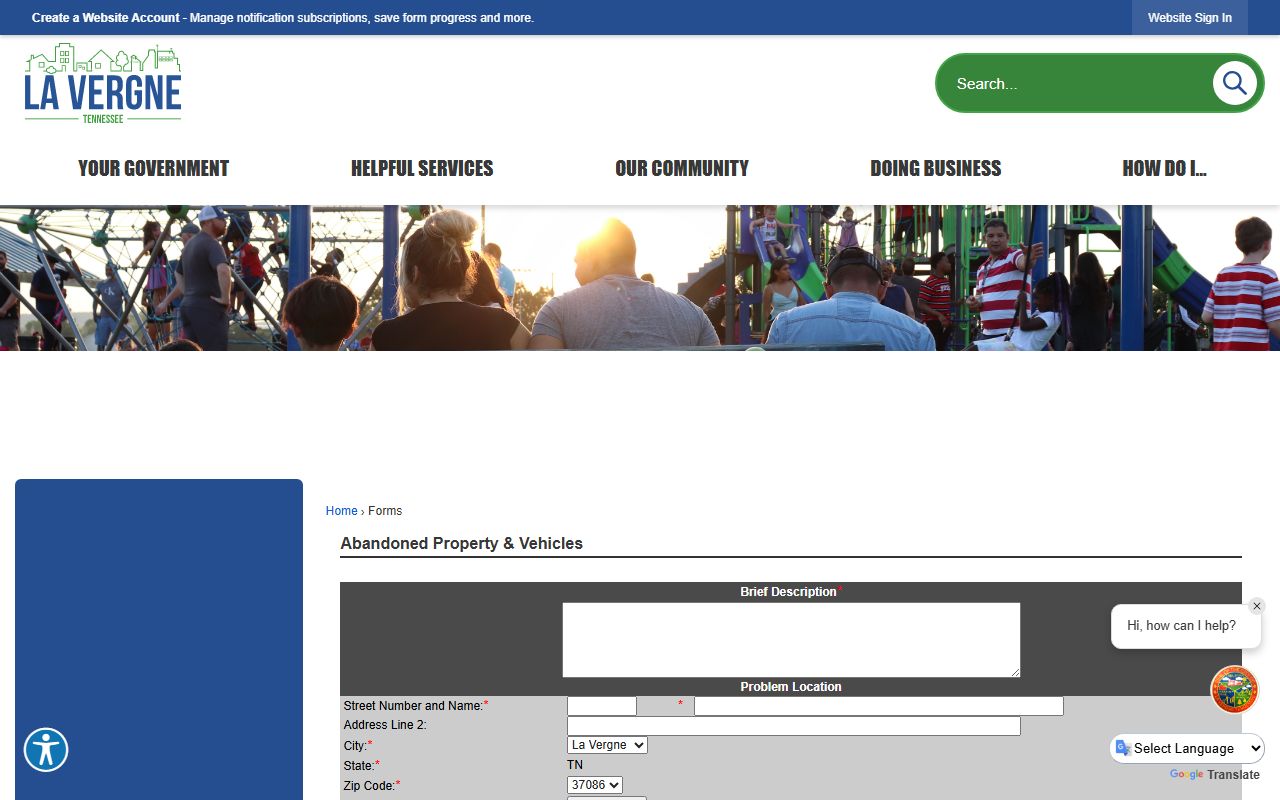
That image fits the page because the forms page is the city entry point for abandoned property and related finance records.
La Vergne Unclaimed Money Claims
La Vergne unclaimed money claims are easier to understand when you treat them as part of a finance cycle, not as a one-time surprise. The city handles tax and utility work, and the forms page shows where some property and vehicle-related requests begin. That means the owner may need a city record before the state claim will make sense. If the balance was never claimed, it may still have a clear local path in the city files.
The tax rate and annual financial report give more context for the claim. The city rate is listed as $0.536 per $100 assessed value, and the county overlap rate is $1.8762. Those details show why tax questions should stay local until the right office is identified. The finance side also manages records that can show whether a payment was posted, returned, or left as an unclaimed credit. That is often the exact point where the claim becomes real.
When the state has the money, the Treasury search and ClaimItTN become the next steps. If the first decision is not favorable, the Tennessee rules in T.C.A. § 66-29-130 and T.C.A. § 66-29-155 give the public search and appeal framework. Those laws are useful, but only after the local record trail is lined up. The claim is stronger when the city office names, the account type, and the owner details all point the same way.
For La Vergne, abandoned property and vehicle forms are useful because they show the city already expects some claims to begin in forms rather than in a phone call. That is a practical clue for owners who want to keep the filing clean and direct.
Good claims are built from records the city already keeps. La Vergne gives you enough public tools to do that without guessing.
La Vergne Unclaimed Money Access
La Vergne unclaimed money access begins with the forms page and the city website. Those pages provide the contact information, the public records route, and the payment context. If the owner used online payments or phone payments, the same city systems may still have the history needed to tie the balance back to the claimant. That is why the local website is more than a contact page. It is the practical door into the record trail.
Records requests are also important because La Vergne says public records are available upon request. If the owner needs a bill, a receipt, or another finance document, the request path can fill the gap. That helps when the state search is positive but the proof still needs a city source. The local paper trail is what makes the claim easy to read. Without it, the owner is left trying to explain a balance with too little detail.
La Vergne's annual financial report reference is another useful piece because it confirms the city keeps formal accounting records. That matters to claimants who want to know the city is handling the money in a structured way. If the funds came from a tax overpayment, a utility credit, or a business license record, the finance side should have a traceable path. The goal is to match the owner's name to that path and keep the claim file tight.
The best search order is local first, state second, proof third. That keeps the claim close to the source and avoids a lot of backtracking later.
La Vergne's records are straightforward once you know where to look. The forms page, finance contact, and Treasury search are the core of the process.
Search La Vergne Unclaimed Money
Search La Vergne unclaimed money by starting with the city forms page, then checking the Tennessee Treasury, and finally matching the record to the owner. That gives you the cleanest route through the local finance system and the state claim system. It also helps if the money came from property taxes, utility billing, or a business license matter, since those are all city functions that can leave a paper trail.
If you are helping someone else, keep the records simple and exact. The city office lines, the form type, and the owner name should all line up before a claim is filed. That is the fastest way to avoid a bad match.