
Maryville Unclaimed Money Records
Maryville residents looking for unclaimed money should begin with the city finance side and then compare the result with Blount County records and the Tennessee state claim system. Maryville is the county seat of Blount County, so city and county records often overlap even when the money belongs in only one place. A careful search keeps the offices separate, uses the right property or utility address, and checks whether the item began as a city bill, a county tax record, or a statewide claim that still needs proof.
Maryville Quick Facts
Maryville Unclaimed Money Search
The City of Maryville site at maryvillegov.com is the first local place to check when a Maryville unclaimed money search starts with city finance records. The city handles municipal operations, finance work, utility billing, business licenses, and other records that can produce an old balance or refund. The Tennessee Uniform Unclaimed Property Act also applies, so a local item may later move into the state database once it becomes dormant.
Maryville’s property tax rate is $2.27 per $100 assessed value, and the city provides property records online along with multiple payment options. Those details matter because a tax bill, utility charge, or license payment can become the paper trail behind an unclaimed balance. A search works best when it follows the office that created the record instead of trying to guess based on the amount alone.
The city utility side is another useful path. Electric, water, and sewer billing can all create deposits or refunds that later become dormant. If a balance was never claimed, the city record may be the only place that still shows where it came from. That is why the city finance office and the utility side should be checked together.
Maryville claims are easier when the old address, account number, and owner name are matched carefully. A small mismatch can hide the right record. Start with the city, then compare the state search, then bring in county records if the item still does not line up.
See the official city home page at maryvillegov.com for the municipal source used in this build.
The Tennessee Treasury portal at treasury.tn.gov/Unclaimed-Property is the state source used alongside the city record.
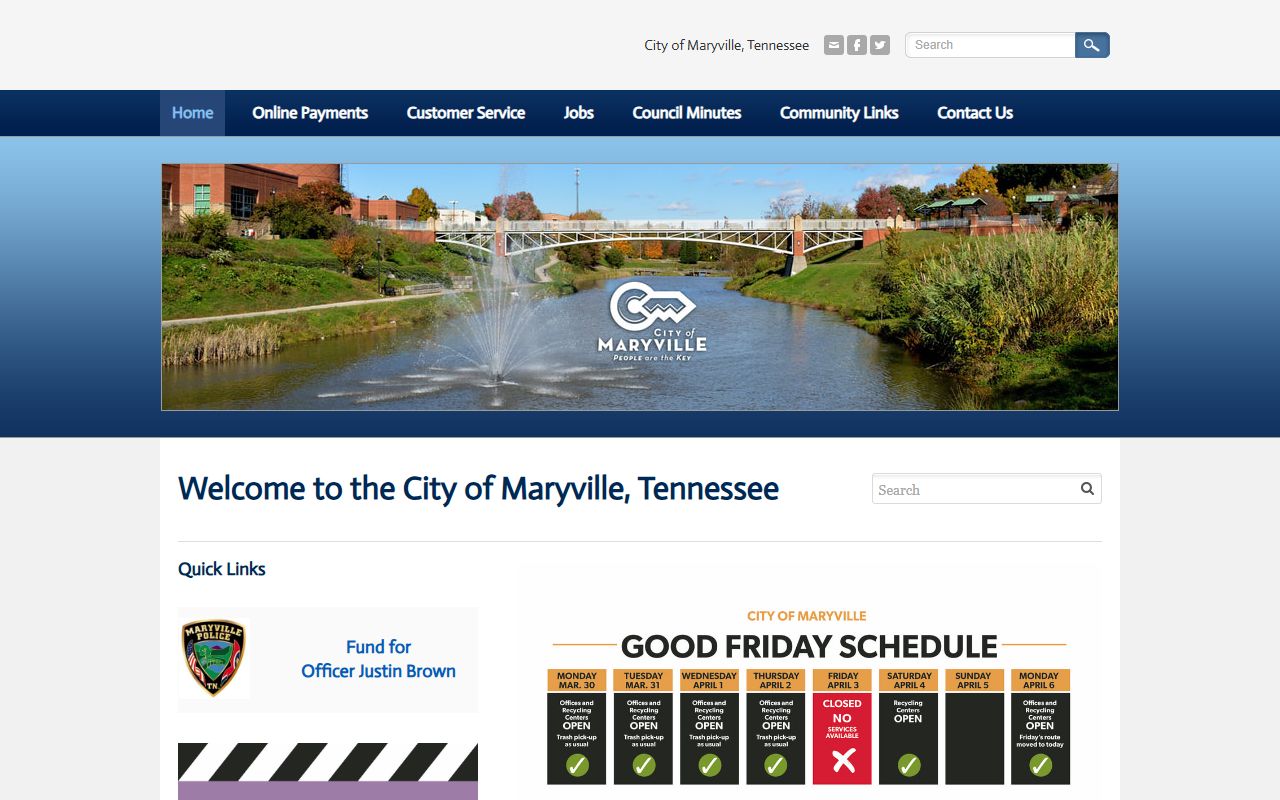
That local image is the right fit because it comes from the official city source. It keeps the page tied to Maryville finance work instead of a generic statewide reference.
Maryville Unclaimed Money Records
Blount County is the other key stop in a Maryville search. The county government at blounttn.gov matters because the county trustee handles property tax collection, sends bills in October, and uses the Tennessee Trustee portal for online search and payment. The trustee is Scott Graves, and the county phone number listed in the research is (865) 273-5900. That county trail is important whenever a record starts with a tax bill or a property file instead of a city refund.
The county search also matters because tax relief and annual sale context can affect where old funds show up. A Maryville address that looks local may still be tied to a county tax record if the payment was handled through the trustee. That is why the city and county should both be checked before the claim is filed. The search is cleaner when the property record is read in the same order it was created.
Maryville residents can also use county property records to confirm older ownership. That helps when a city bill or utility account was written under a name that no longer matches the claim. The county can supply the paper trail that the city office does not hold anymore.
| City Finance |
City of Maryville Municipal operations, finance, and billing |
|---|---|
| County Trustee |
Scott Graves, Blount County Trustee (865) 273-5900 |
| County Timing |
Bills mailed in October Due end of February Delinquent March 1 |
Maryville unclaimed money searches get stronger when the city and county records agree on the same property or owner history. The county side often explains the payment trail while the city side confirms the local account.
Note: Maryville city and county records can overlap, so keep the source office clear before the claim packet is sent.
- Check the city finance record first.
- Compare the county trustee tax trail.
- Use property records for older ownership.
- Save the state claim result with the local file.
Maryville Unclaimed Money Rules
The Tennessee Treasury claim system is the final step for many Maryville searches. The notice rule in T.C.A. § 66-29-130 is part of the reason the state portal is public and searchable. That means Maryville residents can check a claim without paying a fee and then compare the result with city and county records before they file anything.
ClaimItTN at ClaimItTN is the main state search and claim portal. If the claim is denied, T.C.A. § 66-29-155 gives a one-year appeal path in the proper chancery court. That makes the office trail more important from the start because the claimant needs to show where the money came from and why it belongs to them now.
Maryville’s city finance side also matters because utility billing, business licenses, and city finance work can all create old balances. If a customer deposit or refund was never claimed, the city file may be the best proof of the original account.
The county side still matters because a tax record can sit alongside a city account even when they are not the same thing. A strong search in Maryville uses both records, then checks the state portal for the final claim path.
Note: Tennessee claim searches are free, but Maryville claim packets still need enough proof to connect the person, the property, and the correct office trail.
Search Maryville Unclaimed Money
When you are ready to search, begin with the Tennessee Treasury database, then compare the result with Maryville city finance records and Blount County trustee records. That order keeps the offices separate and helps decide whether the balance belongs to a city utility account, a property tax item, or the state claim system. Maryville unclaimed money is easier to finish when the source office is confirmed first.
The city page, county page, and state portal give enough context to build a clear claim packet. That is the safest route when an old refund or deposit has been sitting in the background for years.