
Murfreesboro Unclaimed Money Lookup
Murfreesboro residents looking for unclaimed money usually start with the city finance office, then match that result with the Tennessee Treasury search. The local trail can include a refund, an old utility deposit, or a check that was never cashed. City records matter because they help prove the name, address, and account history behind the claim. If the money moved through city hands first, the right office page and a clean record request can make the next step much easier.
Murfreesboro Quick Facts
Murfreesboro Unclaimed Money Search
The City of Murfreesboro Finance Department is the first local stop for this search. The official listing is the Murfreesboro Finance Department page, and it gives the city office at 111 West Vine Street, Murfreesboro, TN 37130. The same page points to the people who keep the city side moving, including City Clerk Melanie Joy Peterson, Finance Director Amanda DeRosia, City Recorder and CFO Erin Tucker, and City Manager Darren Gore. That mix matters because unclaimed money often begins as a small paper trail, not a big file.
When you search, keep the name set tight and practical. Try full names, old addresses, and business names if the funds came from a company account. Murfreesboro can also hand off unclaimed balances through the state process, so the city and state searches should be checked together. If a city account was closed, the old check number or a utility record can be enough to tie the owner back to the money. The best searches are slow, clean, and exact.
- Use the city finance page first.
- Check the state claim site next.
- Compare old addresses and name changes.
- Keep any claim number with your notes.
The state portal at Tennessee Department of Treasury Unclaimed Property is the free statewide search that should sit beside the local page. Murfreesboro claims can also be routed through ClaimItTN, which keeps the filing path in one place for owners who need to submit proof. That state path is not a replacement for the city record trail. It is the second half of the same search, and it helps confirm whether the money stayed local or moved on to state custody.
For Murfreesboro, the strongest search packets are the ones that blend a city office page, a state claim result, and a few clean facts from the owner. That is enough to turn a loose lead into a real claim.
One more advantage is that city contact names stay current on the finance directory page, which helps if the first search turns up a stale mailing address or an old department note.
Murfreesboro Unclaimed Money Records
The local records trail matters as much as the money itself. Murfreesboro keeps finance work tied to a named office, and that office can help connect a refund or dormant balance to a real person. The finance department handles budget work, reporting, and claims-related administration, while the city clerk and recorder side helps anchor the paper trail. If you are sorting out a claim from an old address, a utility bill, or a vendor refund, the city record structure gives the search some shape.
The city council also matters because the research shows a formal resolution path for unclaimed balances. The agenda minutes page at the Murfreesboro council minutes gives a public look at the sort of records that can support those actions. In the city notes, the finance team handles accounts payable, budget prep, financial reporting, and compliance, which is the kind of work that often leaves the cleanest breadcrumbs for a future claimant. Those records are useful even when the money itself is already sitting at the state level.
That local paper trail is why the city office page and the council record both matter. One shows the current department contact, and the other shows how the city documents the money side over time. The two together are better than either one alone.
If you are gathering proof, start with documents that show the same name in more than one place. Old bills, city notices, and business records can all help. The point is not to build a huge file. The point is to make the claim easy to follow.
The city page can also help confirm who is responsible for the record trail right now. In a city search, current office names are often more useful than old forum posts or stale copied notes.
The finance department page is the best source when you need the office line to match the claim record, and the council minutes page is the cleanest public record when you want the city side of the process on paper.
The local image below comes from that finance listing, which is why it fits the page so well.
The Murfreesboro finance office listing is the source page for the image used on this guide.
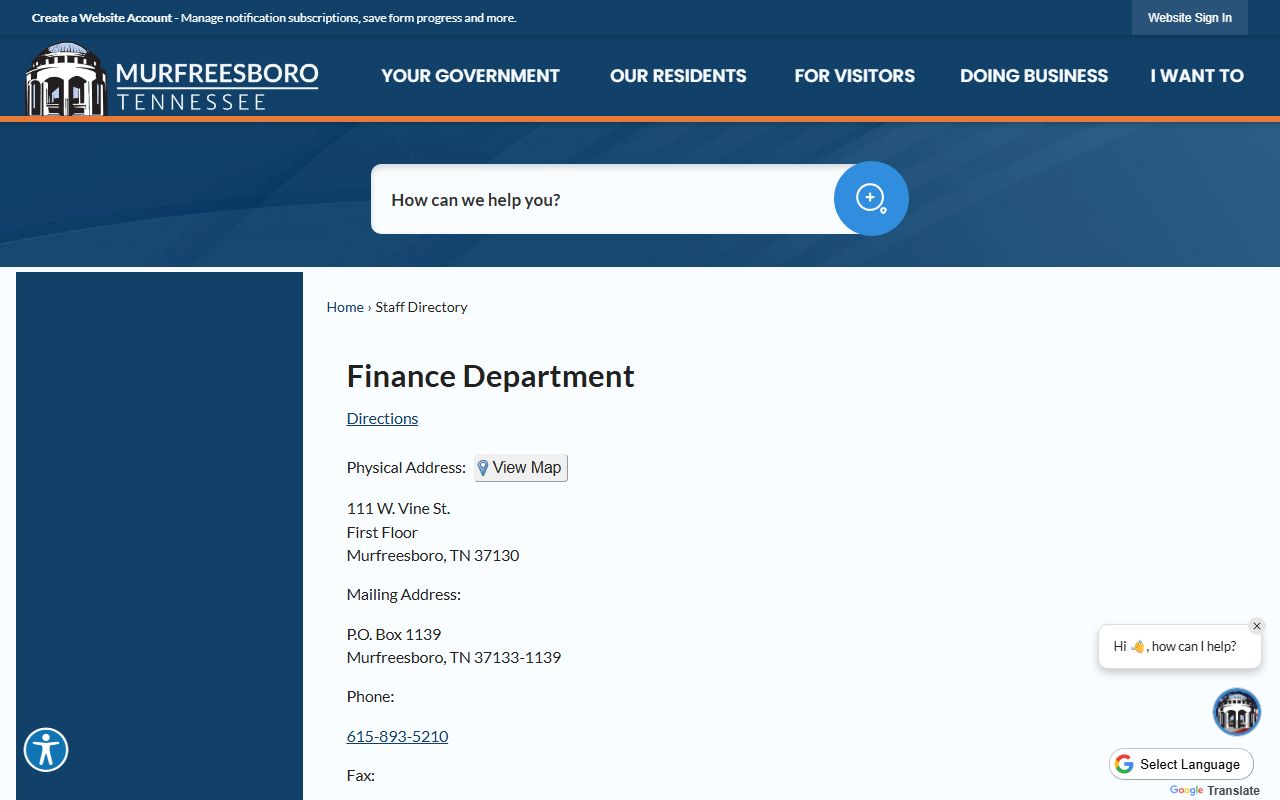
That office image helps tie the page back to the city department that actually handles the local side of the search.
Murfreesboro Unclaimed Money Claims
Murfreesboro city notes point to an annual resolution process for reclaiming balances that have already moved to the state. That is where T.C.A. § 66-29-130 and the Tennessee Treasury search process come together. The state must keep a public search path, and the local city can still track balances that came back through its own books. For a claimant, that means the money may have started as a city refund, passed through state custody, and now need a fresh claim packet to get back to the owner.
The research also points to T.C.A. § 66-29-155 as the appeal route if a claim is denied. That does not change the first step. It does explain why the original filing should be complete and easy to read. If the city or state asks for more proof, a short and clean set of records usually works better than a stack of loose papers. That is true for uncashed checks, utility deposits, and refund money alike.
City resolutions matter because the research shows Murfreesboro can recover funds from the state through a council-approved path. The notes specifically mention the 18-month hold before cities can reclaim money, which is a useful reminder that these funds can sit for a while before the city acts. When that happens, the city record and the state record should be read together, not in isolation.
That is also why the city manager, finance director, and recorder names on the directory page matter. They show the current office chain, and that chain is what keeps a claim from drifting into guesswork. Good contact details are part of good proof.
A claimant who starts with the Treasury search, checks the Murfreesboro finance page, and saves the matching notes will have a cleaner claim file than someone who jumps straight to the last step. The search works best when it moves in the same order the money moved.
Murfreesboro Unclaimed Money Records Access
The easiest way to stay organized is to treat the city page as the anchor and the state portal as the check. Murfreesboro can help with current office names, the council record can show how the city handles resolutions, and the state portal can tell you whether the funds are still sitting at the Treasury level. That mix gives the search a clear path from local to state and back again if needed.
If you are helping someone else, use the same spellings every time. Keep the owner name, the old address, and the office contact together. That sounds simple, but it cuts down on mistakes fast. Murfreesboro unclaimed money claims often live in the small details, and the details are easier to use when they are all in one place.
City records are also helpful when the claim comes from a business account, a rebate, or a payment that was never picked up. That is the kind of situation where finance reporting and council minutes can support the claim without forcing the owner to guess at the path. The record trail is not flashy, but it is solid.
Use the city finance listing, the council minutes page, the Treasury search, and the claim portal in that order when the facts are fuzzy. If the money is there, the right paper trail will usually show it.
When the search feels stuck, go back to the office names and dates. A fresh look at the city records is often enough to find the missing link.
Search Murfreesboro Unclaimed Money
Murfreesboro unclaimed money searches work best when the city record and the state record agree. Start with the finance department, check the Tennessee Treasury, and then line up the claim with the old bills or notices that prove ownership. That route keeps the claim clean and local while still using the statewide system that holds the property.
If the record trail points to a city refund, utility deposit, or old check, the Murfreesboro office names and council records give the search a stronger base. The city is large enough to have a real paper trail, but focused enough that the right contact can still matter.