
Search Anderson County Unclaimed Money
Anderson County residents who are looking for unclaimed money can start with the state ClaimItTN portal and then use county offices to track old names, tax records, and local files that may support a claim. The county trustee, county clerk, and clerk and master each hold different parts of the paper trail. Those records can help you confirm an address, a family line, or an old business name. If your claim comes from older property, county records can matter as much as the state database. Start with a basic search, then follow the records that still point back to Anderson County.
Anderson County Quick Facts
Anderson County Unclaimed Money Basics
The Tennessee Treasury says unclaimed property is money that a business or other holder could not return to the owner. That can include old checking accounts, refunds, wages, deposits, traveler's checks, and other forgotten funds. The state search through ClaimItTN.gov is free, and the direct search portal lets you start with a last name, a business name, or a property ID. Exact matches appear first, but similar names can follow.
Anderson County offices do not pay state unclaimed money claims, but they can help you sort out the names, dates, and places that make a claim stronger. Local tax files, clerk records, and older court records may show where a person lived, what name they used, or who handled an estate. That matters when a claim needs proof beyond a simple search result. If you are checking for family money, an old deed, or a business refund, do not stop at the first search screen. Use the county records too.
- Search the state database first.
- Check old names and former addresses.
- Use county records for proof.
- Keep any claim number or match result.
The Anderson County Trustee office is a practical local stop when a search touches county funds, tax rolls, or a trail that starts with property records. The office page gives the contact path and payment options used by the county.
The Anderson County Trustee records were the county's first place to check for this build set, and the office is staffed by Regina Copeland. Taxes can be paid in person, by mail, or online at tnpropertytax.com, and that flexibility often helps people sort out old account trails before they claim a match.
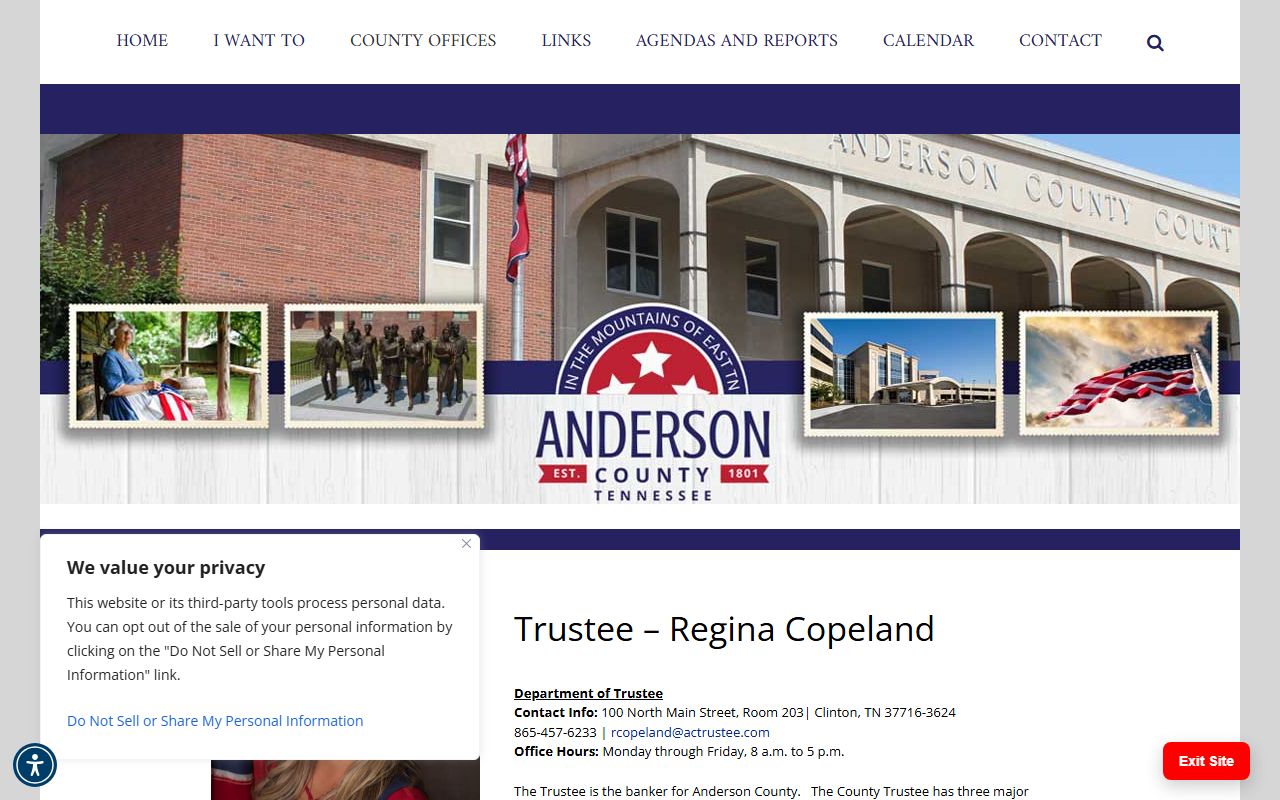
That trustee page is useful when a claim is tied to county tax history. It can also point you toward the right office if you need a paper record instead of only a database result.
Anderson County Trustee and Clerk Help
Anderson County's trustee and clerk offices sit in the same building at 100 North Main Street in Clinton, which makes it easier to compare records side by side. Trustee Regina Copeland handles county property taxes and county funds from state and federal sources. Her office also accounts for money sent to school systems and the county general fund, and it invests temporarily idle county funds. The office phone is (865) 457-6233, and the office is open Monday through Friday from 8 a.m. to 5 p.m.
The county clerk office is run by Jeffrey Cole. The clerk handles Business & Tax services, vehicle registration and licensing, marriage licenses, and notary applications. It is also a practical place to look for older records that might show a change in name or address. The office phone is (865) 457-6226, and the records portal at anderson.countyclerk.us/records/ can help you move from a name to a file.
| Trustee |
Regina Copeland 100 North Main Street, Room 203 Clinton, TN 37716 Phone: (865) 457-6233 Email: rcopeland@actrustee.com andersoncountytn.gov/trustee/ |
|---|---|
| County Clerk |
Jeffrey Cole 100 North Main Street, Room 111 Clinton, TN 37716 Phone: (865) 457-6226 Email: jcole@andersoncountytn.gov andersoncountyclerk.com/ |
| Clerk & Master |
Harold P. Cousins, Jr. Custodian of Chancery Court, Probate Court, and Child Support Court records Handles delinquent tax suits and litigation taxes andersoncountyclerkandmaster.com/ |
The county clerk and the clerk and master each hold different slices of the record trail. That matters when a claim depends on a probate file, a court order, or an older tax matter that still points back to Anderson County. Keep the names and dates together. Then match them to the right office.
Anderson County Clerk & Master records can also help when a claim follows an estate or a child support file. The office bills and collects state and county litigation taxes, so it can be part of the trail even when the money itself is not sitting there now.

The clerk office is a good match for claim support because it can confirm the spelling of a name, a business filing, or an old address. That is often enough to move a stalled search forward.
Search Anderson County Unclaimed Money Records
When you search Anderson County unclaimed money records, start with the Tennessee Treasury search portal and then move into county records only if the first pass is not enough. The direct search portal is built for last names, business names, and property IDs. If your results are broad, try an older surname, a middle initial, or an address from a prior county record. Exact matches show first, but related names can still appear in the result list.
Use county files when the state result looks close but not exact. A probate record can show who inherited a right to money. A deed can show a former address. A tax record can connect a person to a place when a bank account record alone is thin. Anderson County Archives and Records also lists marriage bonds, divorce records, probate records, wills, estates, court records, chancery court records, circuit court records, and tax records. That mix can fill in the gaps that the state database cannot show.
The archives office charges $1 for the first page of a non-certified copy, with $0.50 for each extra page. Certified copies are $2 for the first page and $0.50 after that. Those small fees can be worth it when you need one clean document to prove ownership or a family connection.
Anderson County archives are especially useful when the money belongs to someone who died years ago or changed names. If you are handling an heir claim, do not skip the older paper trail. It may be the piece that turns a possible match into a claim you can file.
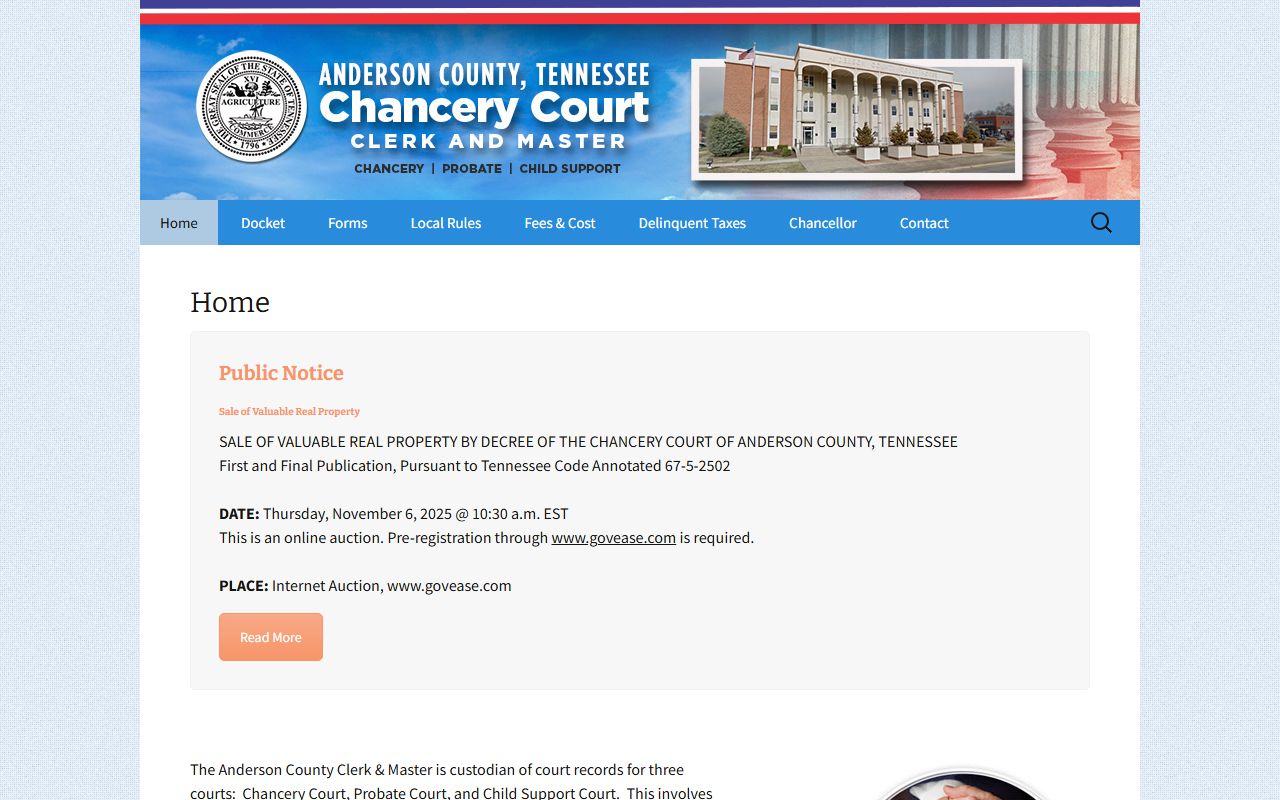
The clerk and master office is the right place to think about when the claim touches probate, chancery, or child support records. Those cases often carry the cleanest proof that an owner, heir, or former account holder really ties back to Anderson County.
Anderson County Unclaimed Money Records That Prove Ownership
Good unclaimed money claims are built on proof. Anderson County Archives and Records can help with that proof because it keeps older record sets that connect names, dates, and family ties. If the account holder used a maiden name, a business alias, or a nickname, you may need an older court or tax file to show the connection. That is common in heir claims and old account searches.
The county archives page also gives you direct contact details for Zach Foster, the archivist. The office is at 100 N Main Street, Room 101 in Clinton, and the phone is (865) 457-6242. The email is zfoster@andersoncountytn.gov. Those details matter when you need to ask whether a marriage bond, probate file, or tax record is stored on site or needs a copy request.
Sometimes the cleanest file is not a money record at all. It might be a probate docket, a court order, or an estate file that proves the owner is gone and the heir has a right to claim. In Anderson County, that is where the records system starts to pull the whole search together.
Note: County records do not replace the state claim process, but they can give you the paper proof that the Tennessee Treasury will ask for before it approves payment.
Tennessee Unclaimed Money Rules
Tennessee treats unclaimed money as custodial property. The owner or heirs can claim it later, and the funds do not become state property. The state says the search is free, and the Treasury portal says there are no fees to look for a match or file a claim. That matters in Anderson County because the county offices help with records, while the state handles the actual claim.
The MTAS reporting guide explains that holders must file annual reports with the Tennessee Department of Treasury by November 1. It also says due diligence is required for dormant property of $50 or more, and that reports must be filed electronically in an accepted format. The law cited there, T.C.A. § 66-29-130, requires the state to keep a searchable public database and publish notice. That is the legal backbone behind the ClaimItTN search.
The NAUPA Tennessee profile is another useful check because it lists dormancy periods, the November 1 reporting date, and the NAUPA 2 format requirement. It also confirms that Tennessee does not require a negative report when nothing is due. If you handle business property in Anderson County, those details help you read the search result and the reporting rules together.
Note: Tennessee is a custodial state. Owners and heirs can claim property at any time, which is why an old Anderson County record can still matter years after the money was first turned over.
What If an Anderson Claim Stalls
If a claim is denied or stalls, keep the documents together and look for the reason in the file. Tennessee law gives a claimant one year to start an action in Davidson County Chancery Court under T.C.A. § 66-29-155. That is a real deadline, so do not sit on a hard denial. If you need to appeal, the complaint must be served on the treasurer and the attorney general and reporter, and the case is tried without a jury.
Before you go that far, make a tight folder. Keep the search result, any claim number, proof of address, probate papers, and a death certificate if the claim is for an heir. Add county copies if you pulled a marriage bond, tax record, or court file. That mix often gives the Treasury the cleanest path to approval.
- Keep the state search result.
- Save any county copy request receipts.
- Match names, dates, and addresses.
- Use heir papers when the owner is deceased.
Anderson County residents can also use the state portal again after a pause. Some claims only need a better name match or a cleaner document scan. A second search is often faster than a long guess.
Start Anderson County Unclaimed Money Search
If you are ready to move, use ClaimItTN first, then compare the result with county records in Clinton. The trustee, county clerk, clerk and master, and archives office each keep different records that can help you prove who you are and why the money belongs to you. That is the cleanest way to handle Anderson County unclaimed money when an account, refund, or estate trail runs old.