
Find Bledsoe County Unclaimed Money
Bledsoe County residents can begin a search for unclaimed money with the Tennessee Treasury and then work through the local offices in Pikeville. That local step matters because county clerk files, deed records, and court records can all point to a name that was used years ago. In a county with older record gaps and a long courthouse history, the right office can make the difference between a dead end and a clean match. Use the state search first, then compare it with the county records that still exist in Bledsoe County.
Bledsoe County Quick Facts
Bledsoe County Unclaimed Money Search
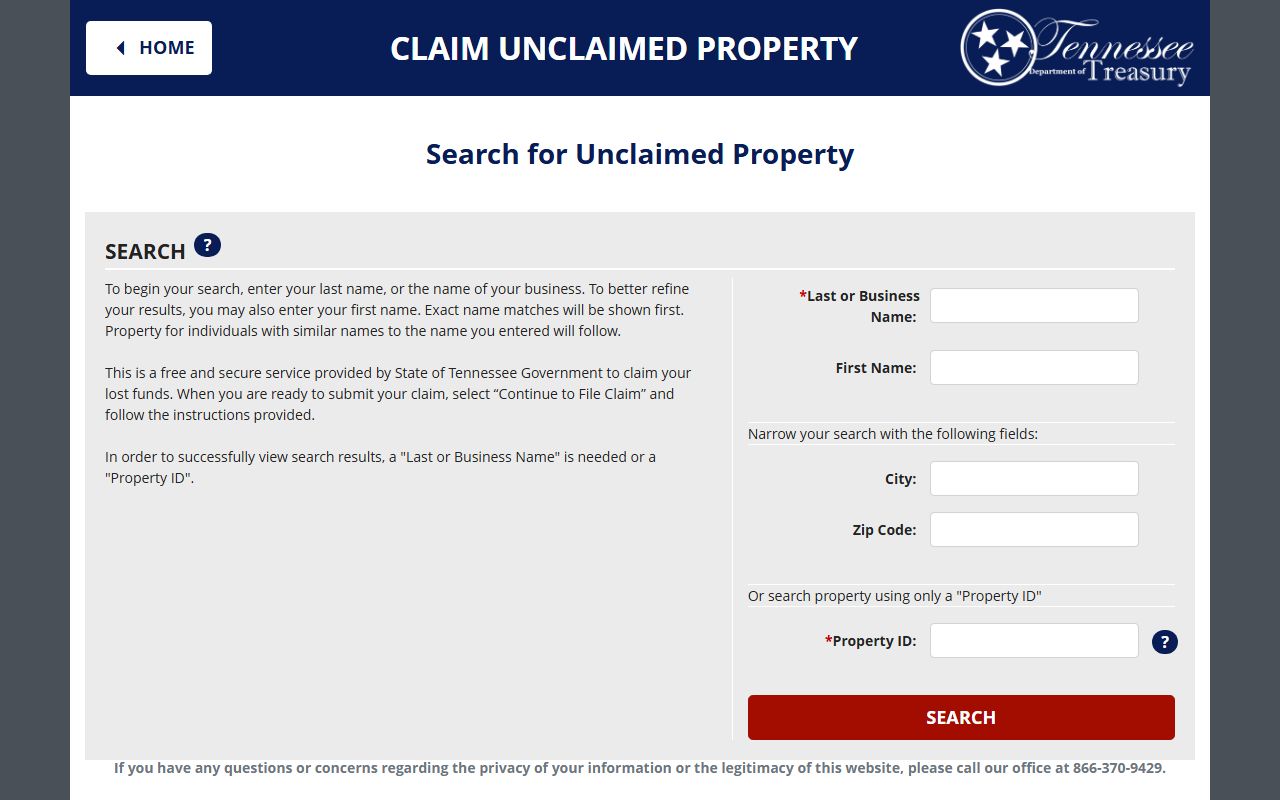
The official first stop is ClaimItTN.gov. Tennessee says the search is free, and the portal is built for simple name lookups by last name or business name. If you know a property ID, that can narrow the results further. The direct search interface is the same official path into the database, so Bledsoe County users do not need a paid service or a third-party site to begin.
That search is useful for more than one kind of money. It can show a forgotten check, a refund, a deposit, or another balance that could not be sent to the owner. If a family name in Pikeville looks familiar but old, search again with past addresses or a business name. Small details often break a search open when a county record has not been used in years.
The Bledsoe County Trustee page at the county trustee office shows the office that handles county funds and tax collection for the county.

That office is a good local anchor when you need to line up a name, a payment, or a tax record.
Bledsoe County Unclaimed Money Records
The county trustee is Tracey Cagle. The office mailing address is P.O. Box 335, Pikeville, TN 37367, and the phone number is (423) 447-2369. The trustee email is trustee@bledsoe.net. That office handles property tax collection and county fund management, which can matter if a search leads back to an old county balance or a tax-related refund.
The county clerk is Genese Sapp. The office mailing address is P.O. Box 212, Pikeville, TN 37367, with phone (423) 447-2137 and email genese.sapp@tn.gov. The clerk handles marriage and divorce records, probate cases, wills, and administrations. That mix makes the office useful when an unclaimed money search points to an estate, a family name, or a record that needs proof of identity before a claim can move forward.
The register of deeds office keeps land records in Bledsoe County going back to 1808. The mailing address is P.O. Box 385, Pikeville, TN 37367, and the phone number is (423) 447-2020. If the record you are chasing is tied to real property, an old deed, or a transfer after a death, that office can help connect the dots.
The Clerk and Master is Tyler Debord, reachable by phone at (423) 447-2484 and email at tyler.debord@tncourts.gov. That office handles court-related unclaimed funds and delinquent tax proceedings. It is the right place to check when the money has a court trail instead of a bank trail.
Bledsoe County Unclaimed Money History
Bledsoe County has a record history that is shaped by courthouse fires. Fires in 1882, 1895, and 1908 damaged many older files, so some lines in the record book begin later than a researcher might expect. Marriage records begin in 1908 because of those losses, and probate records begin in 1883. That means a missing name is not always a missing claim. Sometimes the paper trail is just thinner than it should be.
The Tennessee State Library and Archives notes that a few tax records still survive from 1837-1839, 1861, 1888, and 1889. That kind of gap can matter when you are trying to prove a family connection or track a long-closed account. The link between a person and a place may sit in one surviving page rather than in a full file. That is why Bledsoe County searches often work best when you compare the state database with the older county record sets that do remain.
The Tennessee Treasury direct search page at the state claim portal is still the best place to check first, but the county history helps you understand why an older name might be harder to trace than a newer one.
If the name comes from a family line, search with patience and keep every clue you have.
Bledsoe County Unclaimed Money Laws
Tennessee's unclaimed property rules are built around notice, reporting, and free claims. The main statute framework starts with T.C.A. section 66-29-130, which requires the Treasurer to send notice and maintain a public searchable database. That is the legal reason the state portal exists. It also explains why a Bledsoe County resident can search without paying a fee and without hiring a middleman.
The Treasury page at Tennessee Unclaimed Property and the Department's claim portal work together. The Treasury says the search is free, the claim process is free, and the owner or heir can claim the property when the proof is right. The state keeps funds custodial, so the money never becomes state property in the ordinary sense. For a county resident, that means a missing name can still be worth chasing even years later.
If a claim is denied, the appeal route is in T.C.A. section 66-29-155. The statute gives the claimant one year to bring an action in Davidson County Chancery Court. That is a narrow window, so it helps to save the claim number, the search result, and any email or letter you receive from the state.
Federal bankruptcy money is separate from the state system. For cases tied to East Tennessee, the unclaimed funds page at the U.S. Bankruptcy Court for the Eastern District of Tennessee is the right place to look. It covers a different pool of money, with its own offices in Chattanooga, Knoxville, and Greeneville, so do not confuse it with the Treasury database.
Getting Help With Bledsoe County Unclaimed Money
Local offices can still save time when a search gets messy. If the name might belong to a deed, an estate, or a court matter, start with the county clerk, the register of deeds, or the clerk and master before you give up on the search. Those offices hold different pieces of the same story, and in Bledsoe County the record trail can be split across older files.
Use the state portal first, then check the county records, then keep the claim file together. That order works well in a county with historic gaps because it lets you match what is live now with what survives in the older books. If the first search does not hit, search again later. New property gets reported every year.
- County Clerk for probate, marriage, and general record questions
- Register of Deeds for land records and property history
- Clerk and Master for court-related unclaimed funds
- Trustee for county tax and fund questions