
Search Humphreys County Unclaimed Money
Humphreys County residents looking for unclaimed money can start with the state portal, then work back through local records in Waverly to confirm the right owner, address, or business name. The county trustee and county clerk keep different parts of the paper trail, and those records often explain why a Treasury match looks familiar. Monthly financial reports, county commission minutes, and clerk filings can all help turn a close search result into a usable claim. Begin with the free state search, then use Humphreys County records to prove the connection before you file.
Humphreys County Unclaimed Money Basics
Start with ClaimItTN.gov, then use the Tennessee unclaimed property search portal if you want to tighten the search by name or property ID. The state service is free, and it is built for people who are trying to find lost money without paying a fee. Exact matches appear first, but related names can follow. That is helpful when a record was reported under a nickname, an old business name, or a name that changed after a marriage or estate transfer.
Humphreys County is a good place to slow down and compare records carefully. Waverly is the county seat, and the county courthouse is where many of the local records that support a claim begin. If a Treasury result looks close but not exact, do not stop at the first screen. Check whether an older address, a spouse's name, or a business filing explains the match. The county offices often show those details more clearly than a broad state search.
The county trustee and county clerk are the two local offices that matter most. Trustee records can help you follow tax payments, delinquent balances, or a county fund trail. Clerk records can help you confirm a marriage, a business filing, or a vehicle record. Those records do not replace the state claim file, but they can make the file much stronger and easier to prove.
- Search the state database first.
- Try older spellings and former addresses.
- Keep the claim number with each document.
- Use county records when the match is only close.
The county government site at humphreyscountytn.gov confirms the local office trail and points you back to the courthouse in Waverly. Humphreys County tax work is due February 28 each year, and the trustee accepts online, mail, and in-person payments. That matters when a search starts with a tax credit, a balance that never cleared, or a county payment that later became dormant.
Humphreys County also runs an annual tax sale for delinquent properties. If a Treasury match started as a county tax issue, that sale trail can explain where the money or record went. It gives the claim a date, a place, and a local office that can confirm the story.
Humphreys County Trustee and Clerk Help
Humphreys County Trustee Steven L. Sparkman handles county property tax collection, and the office phone is 931-296-3882. The office is at the Humphreys County Courthouse in Waverly, TN. The county treats the trustee office as the place where tax collection, delinquent property work, and county fund activity come together. That matters when a search points toward a county account instead of a bank record. The trustee also manages county funds, so a balance can leave a paper trail even after the original payment is long past.
Humphreys County Clerk Tonya R. Williams handles vehicle registration, marriage licenses, business licenses, notary applications, and county records. The clerk office phone is 931-296-2373. Office hours are Monday through Friday from 8:00 am to 4:30 pm. The clerk also keeps county commission minutes, which is a useful detail when a claim touches an older county decision, a tax action, or another public record that helps explain a name or address.
The trustee side and clerk side answer different questions. The trustee can tell you whether a tax payment was processed, whether a delinquent balance moved into a sale file, or whether county funds were invested. The clerk can tell you whether a business name, marriage record, or vehicle record fits the person you are trying to match. Put those two record sets together and the search gets much easier to explain.
That mix is especially useful in Humphreys County because the trustee's monthly financial statements can show how county money is tracked over time. If the claim came from a county refund, a tax overpayment, or another local balance, those statements may help you understand where the money moved and why the paper trail looks the way it does.
Keep the county courthouse in Waverly as your anchor point. Most of the records that matter for a Humphreys County claim start there, even when the property itself is now sitting in the state system.
The image below comes from the official county government source at humphreyscountytn.gov and shows the local Humphreys County office path tied to this search.
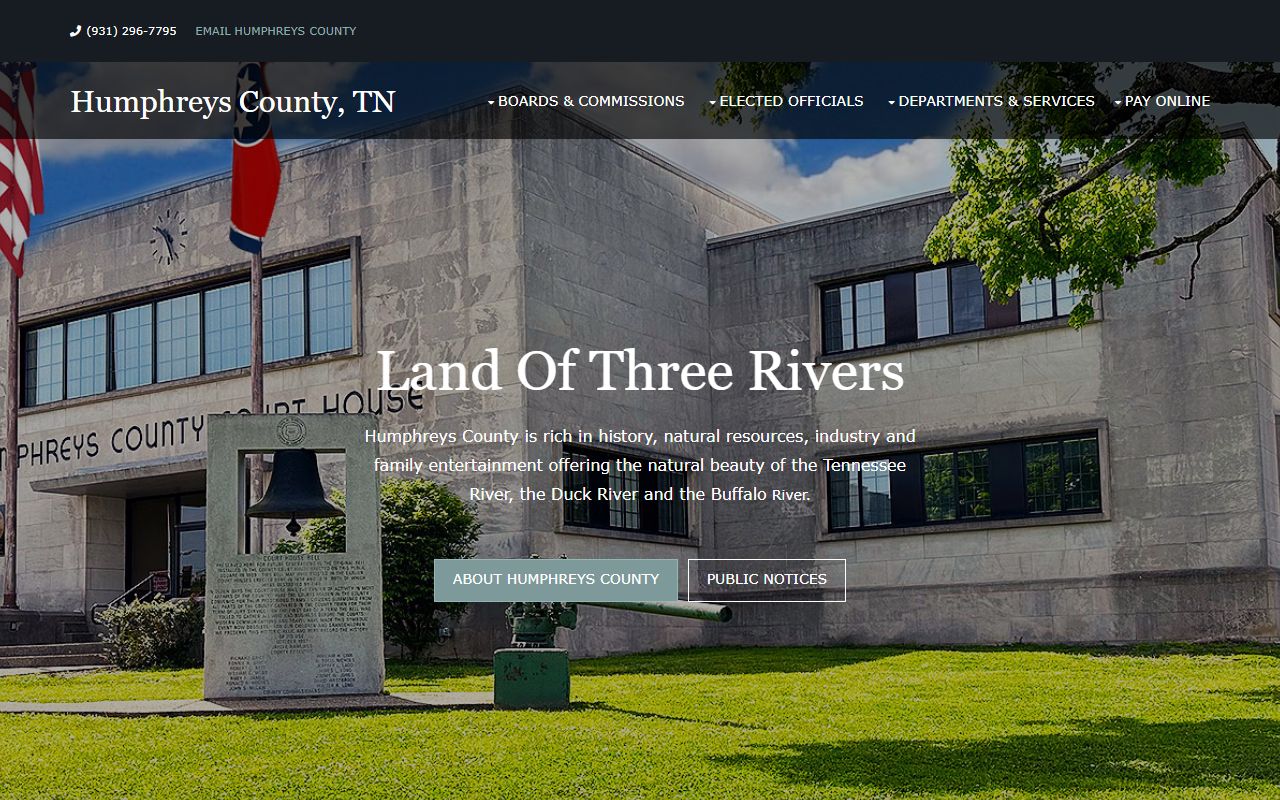
That county government source is the right local checkpoint when you need to confirm the trustee or clerk trail before moving ahead with a state claim.
Humphreys County Unclaimed Money Records That Prove Ownership
Claims work best when the documents line up. If a Humphreys County search gives you a name that is close but not exact, compare the state result to local filings and look for the same person under another address or another family name. A marriage license can show a name change. A business license can show that a company used the same name as the one in the Treasury database. A vehicle record can connect a person to a former household address. Those small clues often do the heavy lifting.
County commission minutes can also help. They can show actions that explain a tax issue, a public payment, or another local decision that left money sitting under a name that no longer matches today's paperwork. If the claim is old, those minutes may be the cleanest record available. They are not flashy, but they can be decisive.
The county trustee's monthly financial statements are another useful tool. They show how county funds are handled and make it easier to understand whether the money was collected, invested, or held for later action. That kind of record is valuable when the claim begins with a county payment or refund trail instead of a bank account. In a small county office, those records often carry more context than a database hit alone.
Keep your notes plain and complete. Write the name variants you tried, the address history you found, and the office that confirmed each record. That will help if the Treasury asks for extra proof later, and it keeps the claim tied to real Humphreys County records instead of a guess.
How Humphreys County Unclaimed Money Claims Work
Tennessee treats unclaimed money as custodial property, so the owner or heirs can claim it later. The state search is free, which is why the process begins with the Tennessee Department of Treasury Unclaimed Property Division and the public claim tools. The notice rules in T.C.A. § 66-29-130 require the state to keep a searchable public database and give notice to apparent owners. That legal structure is what makes the free search possible.
For holders, the reporting side matters too. The MTAS unclaimed property reporting guide explains that annual reports are due by November 1 and that due diligence is required for dormant property of $50 or more. The NAUPA Tennessee profile confirms the same November 1 cycle and notes that Tennessee requires the NAUPA 2 format. Those details help you read a county record in the context of the state reporting system.
If a claim is denied, T.C.A. § 66-29-155 gives a claimant one year to file an appeal action in Davidson County Chancery Court. That deadline matters. If a Humphreys County claim stalls, the fastest move is to gather the state result, the county copies, and any proof of ownership or heir status while the file is still fresh.
Humphreys County is a good example of why local and state records should be used together. The state decides the claim, but the county often holds the proof that makes the claim work. That proof can come from tax records, clerk filings, or commission minutes that show the right person, the right date, and the right address.
If a Humphreys County Unclaimed Money Claim Stalls
If a Humphreys County claim gets delayed, the problem is often a missing document or a bad name match. Go back to the county record that first pointed you to the claim and ask whether another filing can explain the gap. A marriage record may show the name change. A business filing may show the company name. A county commission minute may show the local action that created the paper trail. Once you see the mismatch, the fix is usually straightforward.
Build a small proof folder before you try again. That folder should hold the search result, any county copy request, and the documents that show ownership or heir status. It is better to have too much clean proof than to submit a thin file and wait for a rejection.
- Keep the original state search result.
- Save any county request receipt or copy note.
- Match names, dates, and addresses carefully.
- Add heir records if the owner is deceased.
If the claim is denied, do not let it sit. Tennessee gives only a limited time to appeal a hard denial, and the best way to protect that window is to act quickly. Humphreys County records can help you tighten the file, but the deadline still controls the final step.
Most stalled claims are not lost claims. They are usually record problems that can be fixed with one more county document and a cleaner explanation of how the owner fits the property.
Start Humphreys County Unclaimed Money Search
If you are ready to move, start with ClaimItTN, compare the result with Humphreys County records in Waverly, and keep the trustee, clerk, and commission minute notes together. Steven L. Sparkman, Tonya R. Williams, the February 28 tax date, county funds investment, and monthly financial statements all point toward the same goal, which is proving who owns the money and why.
Humphreys County unclaimed money searches go better when the state result and the local record tell the same story. Use the courthouse records to make that story clear before you file.