
Search Knox County Unclaimed Money
Knox County residents who want to find unclaimed money can begin with the Tennessee Treasury search and then use Knoxville records to confirm the right owner, address, business name, or court trail. Knox County has multiple record sources that can help when a state result looks close but still needs proof. The trustee, register of deeds, circuit court clerk, and county clerk each hold different pieces of the paper trail. Start with the free state search, then compare it with Knox County records until the claim is tied to a clear local document.
Knox County Quick Facts
Knox County Unclaimed Money Basics
The first stop is ClaimItTN.gov, the official Tennessee unclaimed property portal. The search is free, and filing a claim is free if you find a match. You can also use the direct Tennessee search portal when you want to narrow a broad search by name or property ID. Exact matches appear first, and similar names can follow. That is helpful when the property was reported under an older surname, a business alias, or a version of a name that no longer appears in current records.
Knoxville is the county seat, and Knox County also has separate city and county tax systems. That means a search should not stop with one office or one database. A county result may point to a tax issue, while a city result may point to a different local account. The more carefully you compare the records, the easier it is to sort out which office actually created the paper trail that leads to the claim.
The county government site at knoxcounty.org is the main starting point for local office work. It helps you confirm the county structure before you move into trustee, deeds, or court files. That matters because county records often show the address, business name, or estate link that the state database does not explain on its own.
Knox County records are especially useful when the claim starts with an old tax balance, a property transfer, or a business filing. A record that looks small at first can become the key to the whole claim once you connect it to the state search result.
Knox County Trustee and Clerk Help
Knox County Trustee records begin at the City-County Building, 400 Main Street, Suite 427, Knoxville, TN 37902, with mailing to P.O. Box 70. The main phone is (865) 215-2305. The office also serves the east office at 4734 Centerline Drive, the north office at 7328 Norris Freeway, the south office at 7339 Chapman Highway, the west office at 9000 Executive Park Drive, and the Farragut office at 11408 Municipal Center Dr. Online payment is available through the county property tax lookup system, phone payment is available, and the trustee accepts a 2.5% credit card fee or a $1.00 e-check fee.
The trustee office is a strong starting point when a claim connects to county taxes, tax relief, or an old payment trail. Knox County also offers tax relief programs, which can leave paperwork behind that helps prove why a balance moved or why a refund was never picked up. If you are trying to tie a property hit to a county tax record, the trustee side is usually the fastest place to start.
Knox County Clerk Sherry Witt is listed at 300 Main St., Knoxville, TN 37901, with hours of Monday through Friday from 8 a.m. to 4:30 p.m. and phone (865) 215-2385. The county clerk work covers tag and title, marriage licenses, and other routine filings. The office website is http://www.knoxcounty.org/clerk/index.php, and the clerk records can be useful when a claim needs a clean public paper trail instead of only a tax result.
County clerk records often give a claimant the identity link that the state file still needs. A marriage license can show a later surname. A title record can show a vehicle or household link. A routine filing can show the date when someone was active in Knox County. Those simple records often do the heavy lifting in unclaimed money work.
There is also value in knowing which office owns which piece of the file. The trustee tracks money and tax collection. The clerk tracks routine filing history. When a claim starts with a small tax balance or an old household record, both offices may matter.
The image below comes from the official Knox County trustee site at trustee.knoxcounty.org and shows the local tax office side of the county search process.
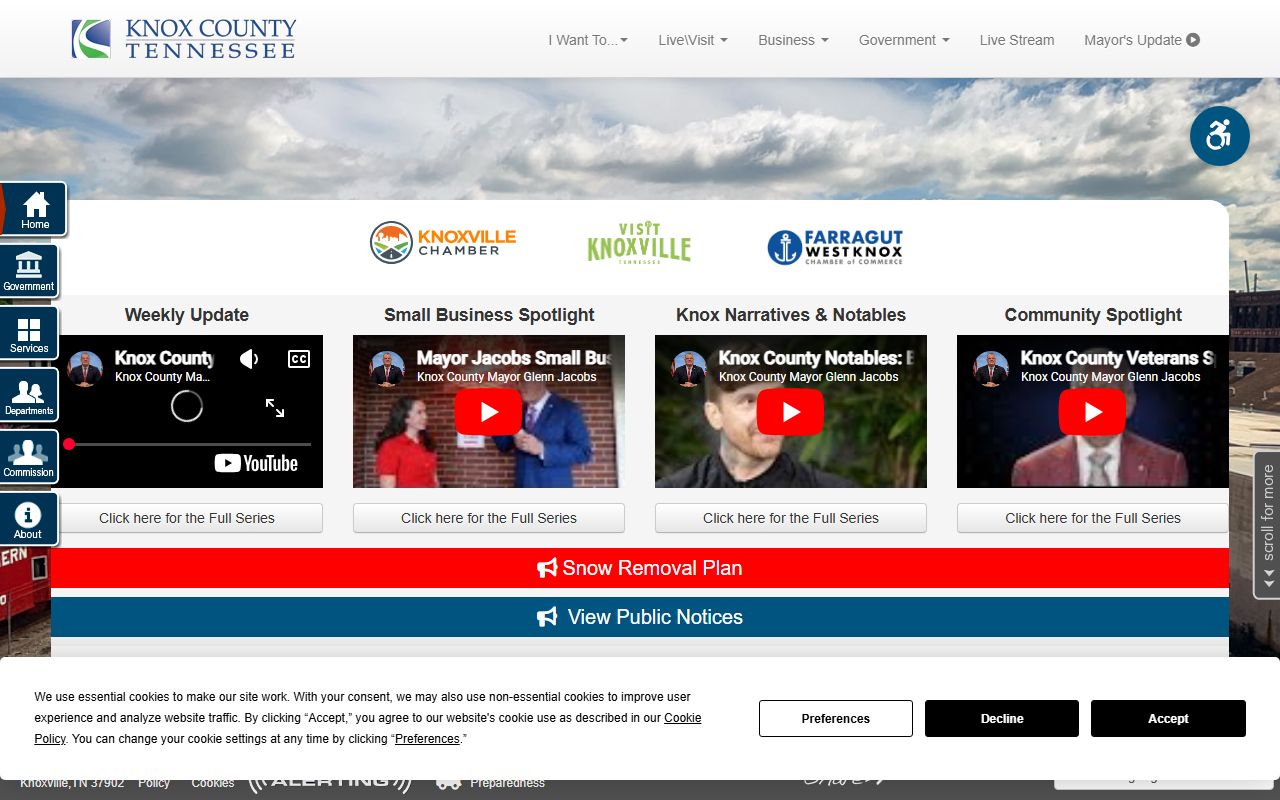
That trustee source is a practical local checkpoint before you compare a Treasury result with Knox County tax records.
Knox County Unclaimed Money Records
Knox County Register of Deeds records begin at 400 Main Street, Suite 225, Knoxville, TN 37902, and the office phone is (865) 215-2330. The office offers an online search, a fraud notification system through alertme.knoxrod.org, and recorded documents that include deeds, mortgages, construction liens, tax liens, historical records, and eRecording. That mix can help link a person, a property, or a business to the right claim.
Recorded documents often explain a state match better than the search screen does. A deed can show where the person lived. A mortgage can show the old property tie. A construction lien or tax lien can explain why a balance appeared in a public file. Historical records are useful when the property holder is gone and the surviving paper trail is older than the current account record.
The Knox County Circuit Court Clerk, Charles D. Susano III, works from the City County Building, Suite M30, 400 Main Street, Knoxville, TN 37902. The office phone is 865-215-2429, and the court records portal gives users an online way to search cases. The office also offers a subscription service, copy fees, and certified copies. That can matter when the claim is tied to a court order, a case docket, or another recorded action that proves why the money belongs to the claimant.
Knox County records are strongest when you use them together. A deed may tell you where someone lived. A court docket may tell you why the property changed hands. A recorded lien may show the business connection. The state claim can only pay the right person, so the county record work is what turns a possible hit into a file with proof.
How Knox County Unclaimed Money Claims Work
Tennessee treats unclaimed money as custodial property, so the owner or heirs can claim it later. That is why Knox County residents should begin with the Tennessee Department of Treasury Unclaimed Property Division and the free state search tools before they rely on county records alone. The notice rule in T.C.A. § 66-29-130 requires a searchable public database and notice to apparent owners. That statutory structure is the reason the state portal exists.
The reporting side matters too. The MTAS unclaimed property reporting guide explains that annual reports are due by November 1 and that due diligence is required for dormant property of $50 or more. That is useful background for Knox County searches because many local records start with a holder that had to transfer the property to the state. The reporting rule explains why the money is now in the Tennessee system instead of the holder's files.
The appeal rule in T.C.A. § 66-29-155 also matters if a claim is denied. A claimant has one year to begin an action in Davidson County Chancery Court after a denial or inaction. That deadline is not generous, so any Knoxville claimant should move quickly if more proof is needed. Knox County records can help fill the gap, but the clock still controls the next step.
Knox County claims work best when the county and state records match. The state keeps the money. The county files help show who should receive it. That is the pattern that usually leads to a clean approval.
Knox County Unclaimed Money Claim Problems
If a Knox County claim stalls, the most common problem is a mismatch in name, address, or proof of authority. Go back to the record that first pointed you to the claim and check whether another county file explains the gap. A deed may show a former address. A court record may show who had authority to act. A trustee record may show that the money came from a tax balance or a county payment instead of a bank account. Those details matter when the state wants a cleaner connection.
Keep your documents together as you work. Save the state search result, the county record, and any heir or ownership document that supports the claim. If the owner is deceased, the paper trail needs to show why the claimant has the right to step in. A tight folder is easier to review and easier to resubmit if the first attempt does not go through.
Do not sit on a denial. Tennessee gives only a limited time to appeal, and the one-year deadline in the statute means the claim can be lost to delay rather than to lack of proof. Knox County offices can help you fix the record issue, but they cannot stop the appeal clock. Act while the file is still fresh.
Most stalled claims are record problems, not dead ends. One cleaner address or one better document often changes the result.
Start Knox County Unclaimed Money Search
If you are ready to move, start with ClaimItTN, compare the result with Knox County records in Knoxville, and keep the trustee, deeds, court, and clerk notes together. Knox County has enough office depth to help with tax records, recorded documents, and court files, so it is worth slowing down and matching the details carefully before you file.
Knox County unclaimed money searches work best when the state result and the local record line up. Use the county offices to prove the connection, then file with a stronger claim file the first time.