
Search Lauderdale County Unclaimed Money
Lauderdale County residents searching for unclaimed money usually start with the Tennessee Treasury, then compare the result with Ripley records that can confirm the right name, address, or county filing. The trustee can help with the tax trail, and the county clerk can help with records that show how a person or business was identified over time. That local step matters when a Treasury hit looks close but still needs proof. If the money began as a tax payment, a refund, or a county record that changed hands later, Lauderdale County offices can help tie the claim to the right owner.
Lauderdale County Quick Facts
Lauderdale County Unclaimed Money Search
The best first stop is ClaimItTN.gov. Tennessee says the search is free, and the state portal is built for simple lookups by last name or business name. If you have a property ID, that can narrow the result list further. The official claim site is the clean place to begin because it tells you whether the money is already in state custody and whether the owner or heirs may need to file a claim.
Lauderdale County offices do not issue the payment, but they can help prove who should receive it. A tax bill, a business record, or a county file can show the right name and address. That is useful when the Treasury result is close but not final. In a county like Lauderdale, a search often moves faster when you use the state portal first and the local record set second. That keeps the work focused and cuts down on guesswork.
Keep the search tight and repeat the same spelling across each record set. Then add former addresses, business names, and any family names that fit the owner. That approach fits Tennessee's claim process well because T.C.A. § 66-29-130 requires a public searchable database, while county records help fill the gaps the state system cannot see.
Records in Ripley
The Tennessee Department of Treasury page at the official unclaimed property division site is the state starting point for every Lauderdale County search, and the image below comes from that portal. No usable local county screenshot was available in the manifest context, so the state portal is the right visual reference for the search path.
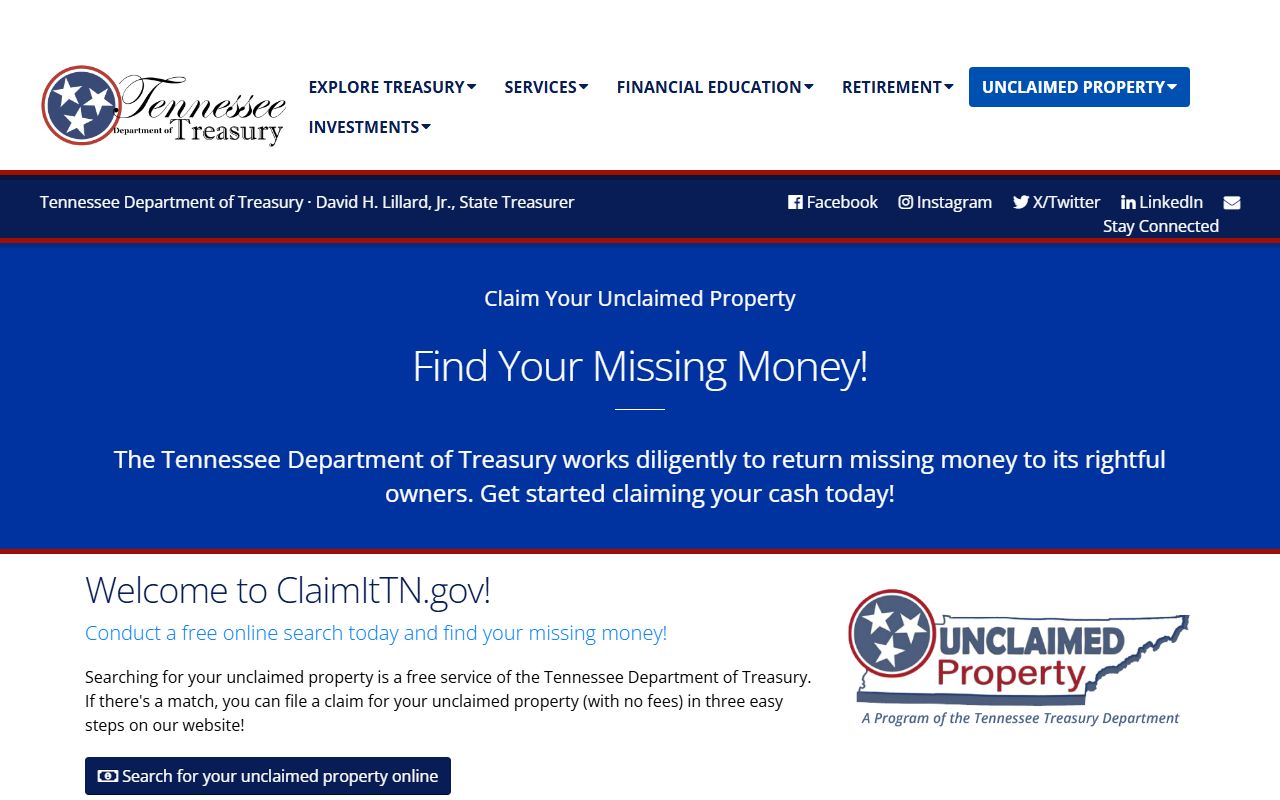
That state view keeps the claim tied to the official custodian, while Lauderdale County records supply the local proof. Ripley is the county seat, so the office trail stays compact. That makes it easier to compare the state result with the county address, an older business name, or a filing that no longer matches the person who owns the money now.
The county government source at lauderdalecountytn.gov helps place the office structure in one spot. It is the best county reference when you need to confirm how the trustee and clerk fit into the local tax and records trail. That matters because Lauderdale County unclaimed money often starts with a county payment, refund, or filing that needs one more office check before it is ready to claim.
Lauderdale County Unclaimed Money and Tax Bills
The Lauderdale County Trustee is John C. Hodge, and the office is at Lauderdale County Courthouse in Ripley. The phone number is 731-635-3781. Tax bills are mailed annually, and the due date is at the end of February. That timing matters because unclaimed money often begins as a payment that was not cashed, a refund that never posted, or a county balance that stayed on the books after the owner moved or the record changed.
The trustee handles property tax for Lauderdale County, and delinquent taxes can accrue interest if they are not paid on time. The office also runs an annual tax sale and helps eligible residents with tax relief programs. Those details can create a clear paper trail when a claim starts with a tax issue rather than with a bank account. If the county records show a sale, a credit, or a change in the tax year, that can point you back to the right owner fast.
It helps to think about the trustee office as the money side of the search. If a balance was paid late, overpaid, or never cleared, the county file may show why the Treasury record exists. When you match the county tax story to the state database, the claim becomes easier to explain and easier to prove.
Lauderdale County residents can also use the county trustee page on the government site to confirm office contact before they visit. That local source is often the fastest way to verify whether a tax item, a refund, or an old account still has a county record attached to it.
Clerk Records in Lauderdale County
Donna C. Simpson serves as the Lauderdale County Clerk, and the office phone is 731-635-2561. The clerk handles vehicle registration, marriage licenses, business licenses, and notary applications. The office also keeps official county records. That mix matters because unclaimed money searches often need one of those record types to confirm identity. A marriage record can explain a name change, and a business filing can show that a company once used the same name that appears in the state database.
The clerk office is at the Lauderdale County Courthouse, and the hours are Monday through Friday from 8:00 a.m. to 4:30 p.m. The business license fee is $15, and notary applications are $12. Those details are small, but they help when a search turns into a visit. Knowing the office hours and fees ahead of time keeps the county part of the search efficient and avoids a second trip for something that could have been handled in one stop.
Vehicle registration and titling can also help connect an older address to a person who should receive the money. That is especially useful when a Treasury result looks right but still needs a public record that proves where the owner lived or how the name was used. County clerk records do not replace the claim itself, but they make the claim easier to support.
Lauderdale County Unclaimed Money Rules
The legal path begins with the Tennessee Treasury. Under T.C.A. § 66-29-130, the treasurer keeps a public searchable database and sends notice to apparent owners. That is why the search starts online instead of at a local counter. It also explains why Lauderdale County residents can search for unclaimed money without paying a fee.
The reporting side matters too. Tennessee's custody system means the state holds the property until the owner or heirs claim it. That custodial setup is what makes the claim searchable years later. It is also why a county tax record, a clerk filing, or a county notice can be enough to make a state match much easier to support.
If a claim is denied or stalled, the appeal route is set by law as well. T.C.A. § 66-29-155 gives a one-year window to file in Davidson County Chancery Court. That deadline matters. If a claim gets stuck, keep the search result, the county record copy, and the proof of identity together so you can answer the reason for the denial quickly.
When the state and county records line up, the claim is much easier to support. That is the real value of the Lauderdale County paper trail. It tells you where the money came from, who the county considered responsible, and which office can back up the owner or heir's claim.
Local Follow-Up
If the Lauderdale County result still feels thin, circle back through the state portal, the trustee, and the clerk before you file. The county offices give you the local office path, while the Treasury portal gives you the actual claim path. Those pieces work better together than either one does alone, especially when the record began as a tax item, a filing, or an older account that changed hands over time.
You can also use the Lauderdale County government site as a final check before submission. Start with ClaimItTN, confirm the match in Ripley, and keep every page you print or save. That is the cleanest route for Lauderdale County unclaimed money when the money started as a county balance, a refund, or a record that now needs proof from more than one office.